Why Multi-Tenant Buildings Benefit From Daytime Maintenance
Multi-tenant buildings can be difficult to keep consistently clean because activity is spread across several businesses, employees, visitors, vendors, and shared spaces. Even when a strong nightly cleaning program is in place, lobbies, restrooms, elevators, hallways, and break areas can become untidy again within hours.
That is where daytime maintenance can help.
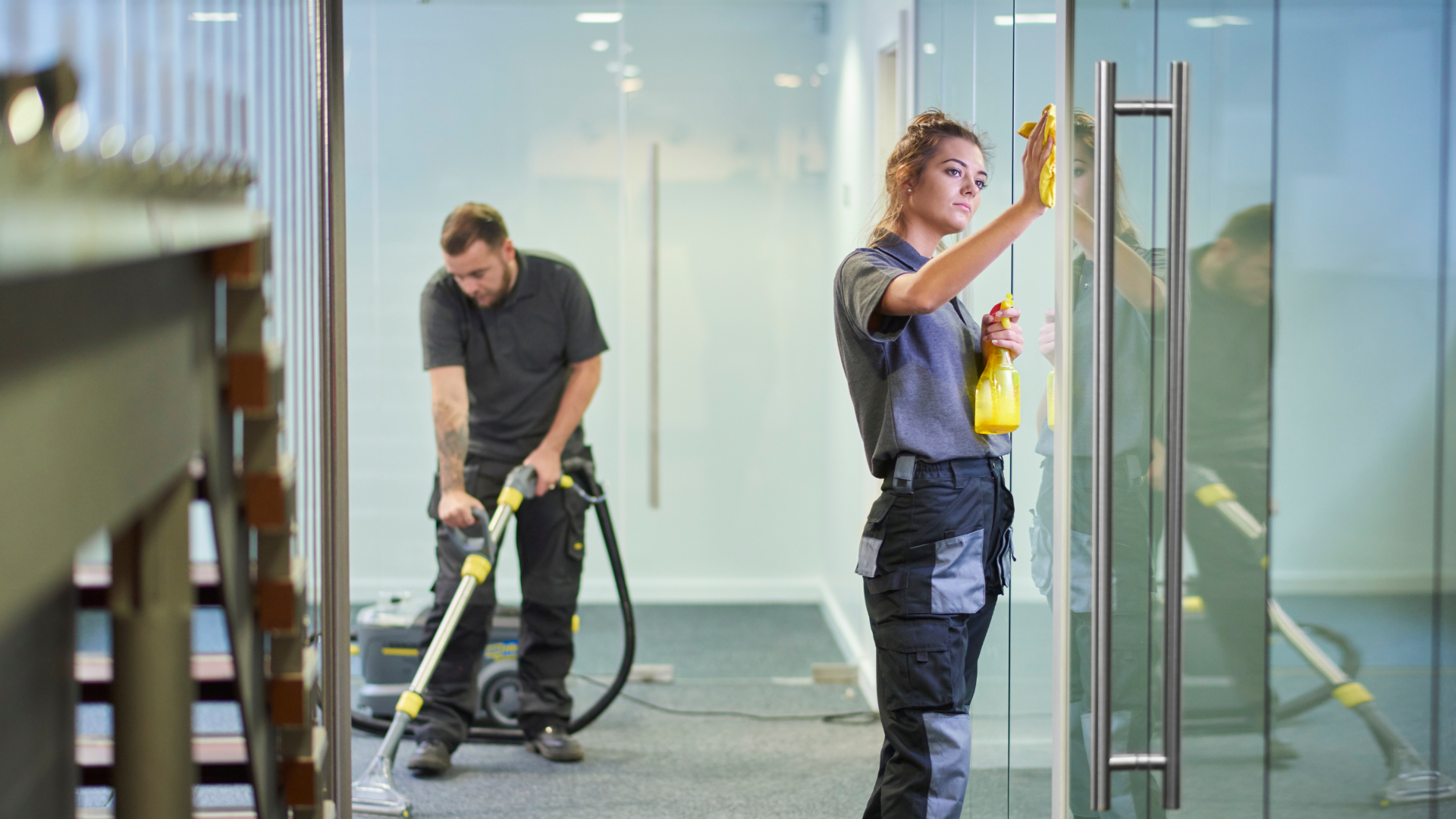
A day porter provides ongoing support while the building is occupied, handling small problems before they become noticeable and helping common areas stay presentable throughout the day.
Shared Spaces Get Heavy Use
In a multi-tenant property, common areas often experience far more traffic than individual offices.
The lobby may see employees arriving throughout the morning, visitors coming and going, deliveries, service providers, and prospective tenants. Elevators and stairwells may be used continuously. Restrooms can serve people from multiple suites.
That level of activity creates cleaning needs that do not always fit neatly into an evening schedule.
A space that looked clean at 7 a.m. may need attention again by lunchtime.

Spills Cannot Always Wait Until Night
Some cleaning issues need an immediate response.
A spilled drink in a hallway, water near an entrance, or debris on a common-area floor can create both appearance and safety concerns.
Waiting several hours for the evening crew may not be practical.
Day porters provide an on-site resource for handling those situations sooner.
That can be particularly useful in larger properties where building staff may already be focused on maintenance, security, tenant requests, and other responsibilities.
Elevators and High-Touch Areas Need Attention
Elevator buttons, handrails, door handles, and other shared touchpoints can become visibly dirty quickly in a busy building.
The same is true of elevator floors and cab interiors.
Daytime service can include periodic checks of these areas so they remain presentable between nightly cleanings.
The exact frequency should depend on building traffic and property standards rather than a one-size-fits-all schedule.

Day Porters Can Support Tenant Satisfaction
Tenants notice how shared spaces are maintained.
A clean suite can still feel less appealing if the hallway outside is dirty, the restroom is poorly stocked, or the lobby looks neglected.
Consistent daytime maintenance helps property managers address the spaces that everyone shares.
That can contribute to a more professional environment and reduce the number of routine cleaning complaints directed to management.
Daytime Service Complements Nightly Cleaning
A day porter does not replace a full janitorial program.
Nightly cleaning is still important for more thorough tasks such as restroom cleaning, vacuuming, mopping, trash removal, and scheduled floor care.
Daytime maintenance fills a different role.
It handles the small, recurring issues that develop while the building is occupied.
When both services are coordinated, the facility can stay cleaner from morning through evening instead of cycling between “freshly cleaned” and “needs attention.”

Service Should Match the Building
Not every multi-tenant property needs the same level of daytime support.
A smaller office building may only need limited porter coverage. A large property with heavy visitor traffic may benefit from more frequent rounds.
The right plan depends on occupancy, restroom volume, lobby traffic, operating hours, tenant mix, and property-management expectations.
Keep Shared Spaces Under Control Throughout the Day
Multi-tenant buildings create unique cleaning challenges because no single company controls how heavily common areas are used.
ABS Facility Solutions provides commercial janitorial services, day porter support, restroom maintenance, floor care, disinfection, and other facility services for multi-tenant and commercial properties.
If your building looks clean in the morning but struggles to stay that way throughout the day, contact ABS Facility Solutions to discuss a daytime maintenance program built around your property’s actual traffic and shared-space needs.