How to Maintain Hard Floors in Busy Buildings
Busy buildings put hard floors through a lot. Foot traffic, rolling carts, spills, dirt, moisture, and daily wear can quickly make a clean facility look neglected. For facility managers and building owners in Milford, DE, floor condition is not just about appearance. It affects safety, cleanliness, and how visitors feel the moment they walk in.
Hard floors can last for years, but only when they are cared for correctly. A quick mop may remove surface dirt, but it will not always protect the finish, prevent scuffs, or restore shine. Over time, small maintenance gaps can lead to dull floors, stained surfaces, slippery areas, and more expensive repairs.
The good news is that hard surface floor maintenance becomes much easier with the right routine. With consistent floor care, scheduled stripping waxing, and dependable janitorial cleaning, busy facilities can keep floors looking cleaner and performing better all year.
Why Do Hard Floors Wear Down So Quickly?
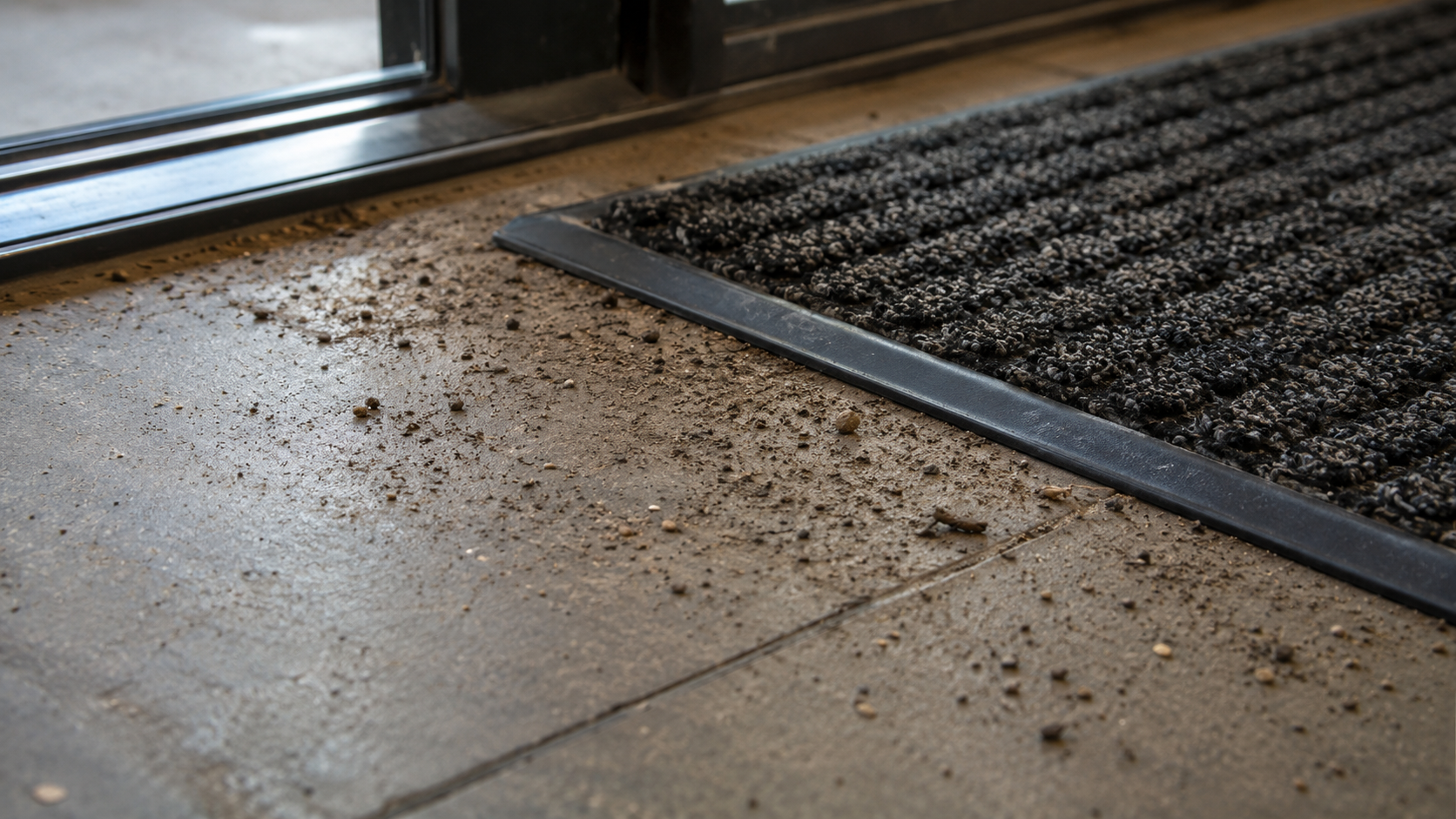
Hard flooring is built for durability, but busy buildings create constant stress. Schools, offices, healthcare settings, government buildings, and commercial properties all deal with heavy movement throughout the day. Every person who enters the building can track in dust, grit, salt, moisture, or outdoor debris.
Dirt Acts Like Sandpaper
Even when floors look clean, fine dirt particles can scratch the surface. As people walk across the building, that grit gets pressed into the floor finish. Over time, the surface becomes dull, worn, and harder to clean.
This is why routine sweeping, dust mopping, and entrance mat maintenance matter. A strong floor care plan removes debris before it has time to damage the surface.
Moisture Can Break Down the Finish
Rain, snow, spills, and cleaning mistakes can all introduce moisture to hard floors. If water sits too long, it can weaken floor finish, create spotting, or lead to slippery areas. In high-traffic Milford, DE facilities, this is especially important during wet weather and seasonal changes.
A proper janitorial cleaning schedule should include fast spill response, correct wet mopping methods, and the right products for each floor type.
What Should Daily Hard Floor Care Include?
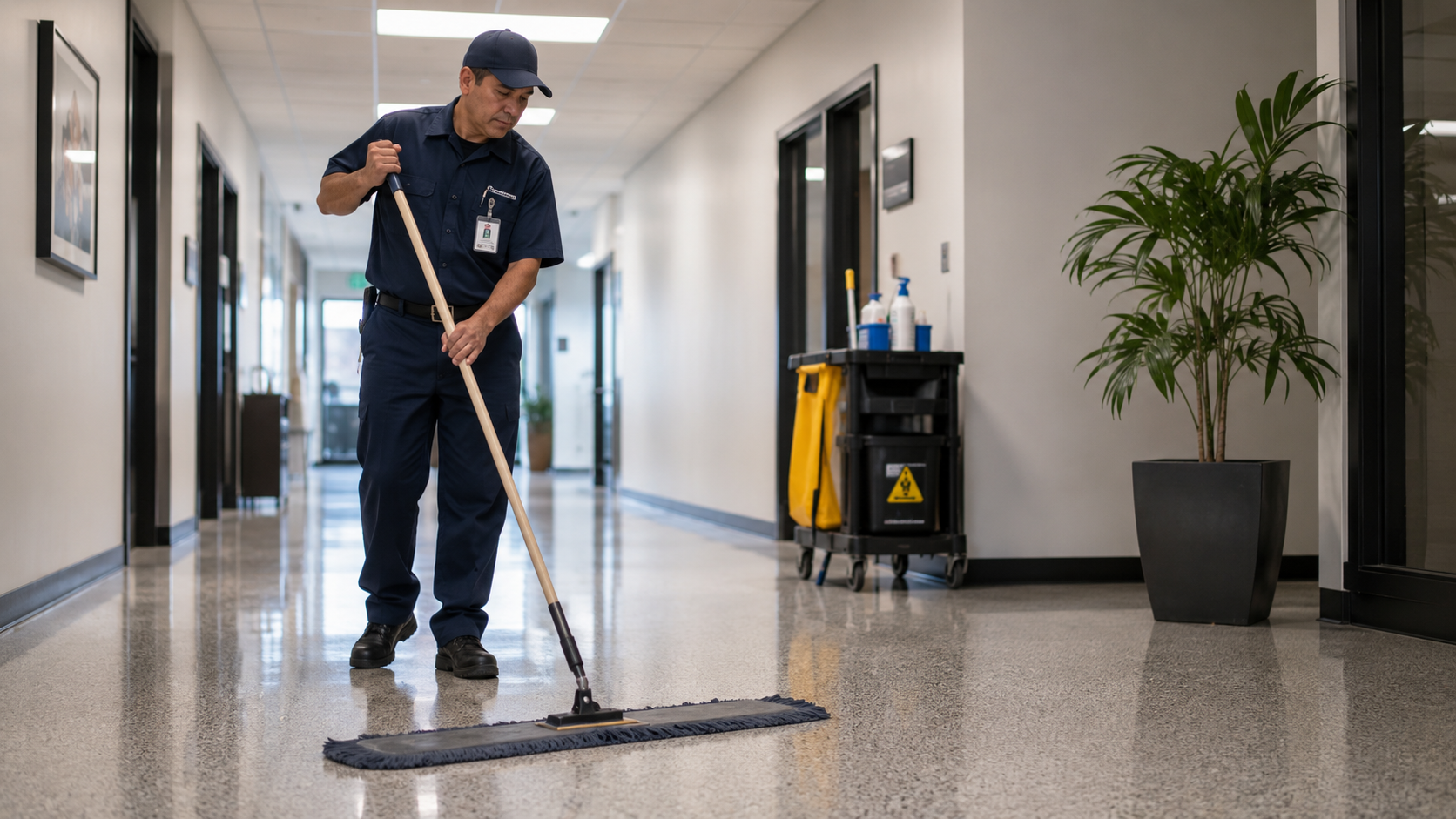
Daily maintenance is the foundation of clean, safe, and attractive floors. It does not have to be complicated, but it does need to be consistent. The goal is to remove debris, reduce buildup, and prevent small issues from becoming larger problems.
Start With Entry Points
Most floor damage begins near entrances. Dirt and moisture get tracked inside, then spread through hallways, lobbies, restrooms, and shared spaces. Quality mats, regular vacuuming, and frequent dust mopping help reduce that movement.
Facility managers can also benefit from day porter services in Milford, DE when buildings need cleaning support throughout the day. Day porters can address spills, touch up common areas, and help keep high-traffic floors presentable between deeper cleanings.
Use the Right Cleaning Products
Not every hard floor should be cleaned the same way. Vinyl, tile, concrete, laminate, and other hard surfaces may require different products or methods. Using the wrong cleaner can leave residue, dull the finish, or make the floor feel sticky.
A good hard surface floor maintenance plan should match the cleaning product to the floor material. This helps protect the finish while keeping the surface clean and safe for daily use.
Avoid Over-Wetting Floors
More water does not mean a cleaner floor. In fact, too much water can cause streaking, residue, and safety concerns. Floors should be damp-mopped with proper dilution and allowed to dry quickly.
This is one reason trained janitorial cleaning teams are helpful. They understand how to clean efficiently without leaving behind excess moisture or product buildup.
When Do Floors Need Stripping Waxing?
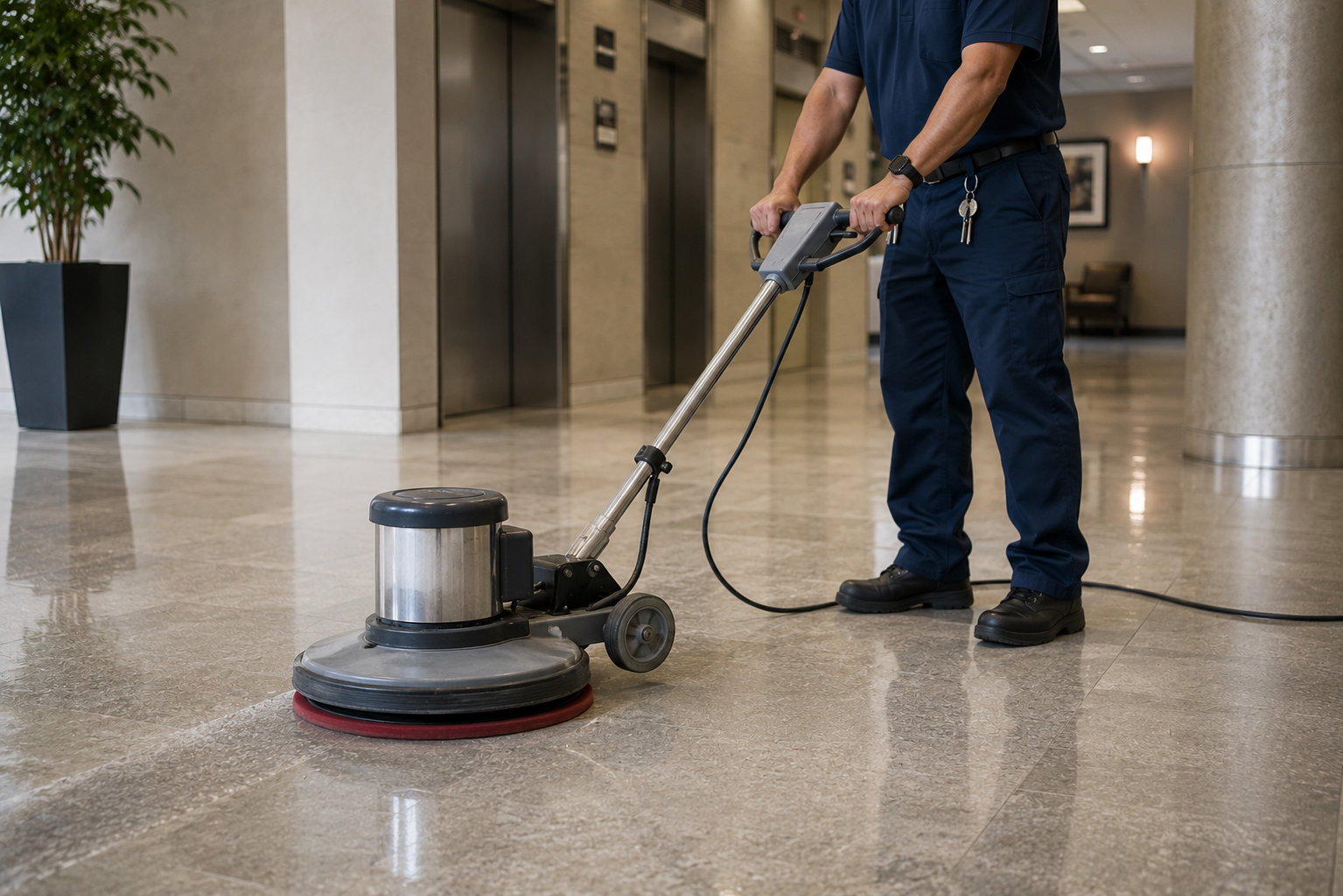
Even with daily cleaning, floor finish eventually wears down. Scratches, dull areas, traffic lanes, and embedded dirt are common signs that basic mopping is no longer enough. That is when stripping waxing may be needed.
Know the Warning Signs
Floors may need stripping and waxing when they no longer shine after cleaning, show uneven wear, or have dark buildup along edges and corners. Scuffed paths through hallways and entryways are also common signs of finish breakdown.
For buildings that need more than routine mopping, professional floor care and stripping-waxing in Milford, DE can help restore a cleaner, brighter appearance. The process removes old finish and buildup before applying new protective layers.
Do Not Wait Until Floors Look Damaged
Waiting too long can make restoration more difficult. Once the protective finish is worn away, the flooring underneath becomes more exposed to stains, scratches, and long-term damage.
A scheduled stripping waxing plan can help facility managers stay ahead of heavy wear. The right schedule depends on traffic levels, floor type, building use, and cleaning frequency.
How Can Janitorial Cleaning Protect Floor Health?
Floor maintenance works best when it is part of a larger cleaning plan. Restrooms, breakrooms, offices, hallways, and entry areas all affect how dirt and debris move through a building. If those spaces are not cleaned properly, floors will show it quickly.
Cleaning Frequency Should Match Building Use
A small office may not need the same schedule as a school, clinic, or government facility. Busy buildings often need daily cleaning, periodic deep cleaning, and scheduled floor care throughout the year.
ABS Facility Solutions LLC provides commercial cleaning services in Milford, DE for facilities that need steady cleaning support. When routine janitorial cleaning and floor care work together, floors stay cleaner and require less emergency attention.
Do Not Ignore Adjacent Surfaces
Hard floors often connect to carpeted offices, mats, rugs, and upholstered areas. If those areas hold dirt, it can transfer back onto hard flooring. That is why carpet cleaning in Milford, DE can support a cleaner overall facility.
A balanced cleaning plan looks at the full building, not just one surface. This helps reduce tracked-in debris and keeps both hard and soft flooring in better condition.
What Floor Care Mistakes Should Facility Managers Avoid?
Floor maintenance problems often start with small habits. The wrong product, skipped cleaning, or delayed service can shorten the life of the floor finish. Avoiding common mistakes can save time and money.
Using Harsh Chemicals Too Often
Strong chemicals may seem like a fast fix, but they can damage floor finish if used incorrectly. Some products strip away shine or leave behind residue that attracts more dirt.
Buildings that prefer lower-impact cleaning options may want to consider green cleaning services in Milford, DE. Green cleaning can support healthier indoor spaces while still keeping floors and common areas clean.
Skipping Preventive Maintenance
It is easy to delay floor work until the surface looks bad. But by then, the floor may need more labor and more product to restore. Preventive hard surface floor maintenance keeps floors in better shape and reduces surprise problems.
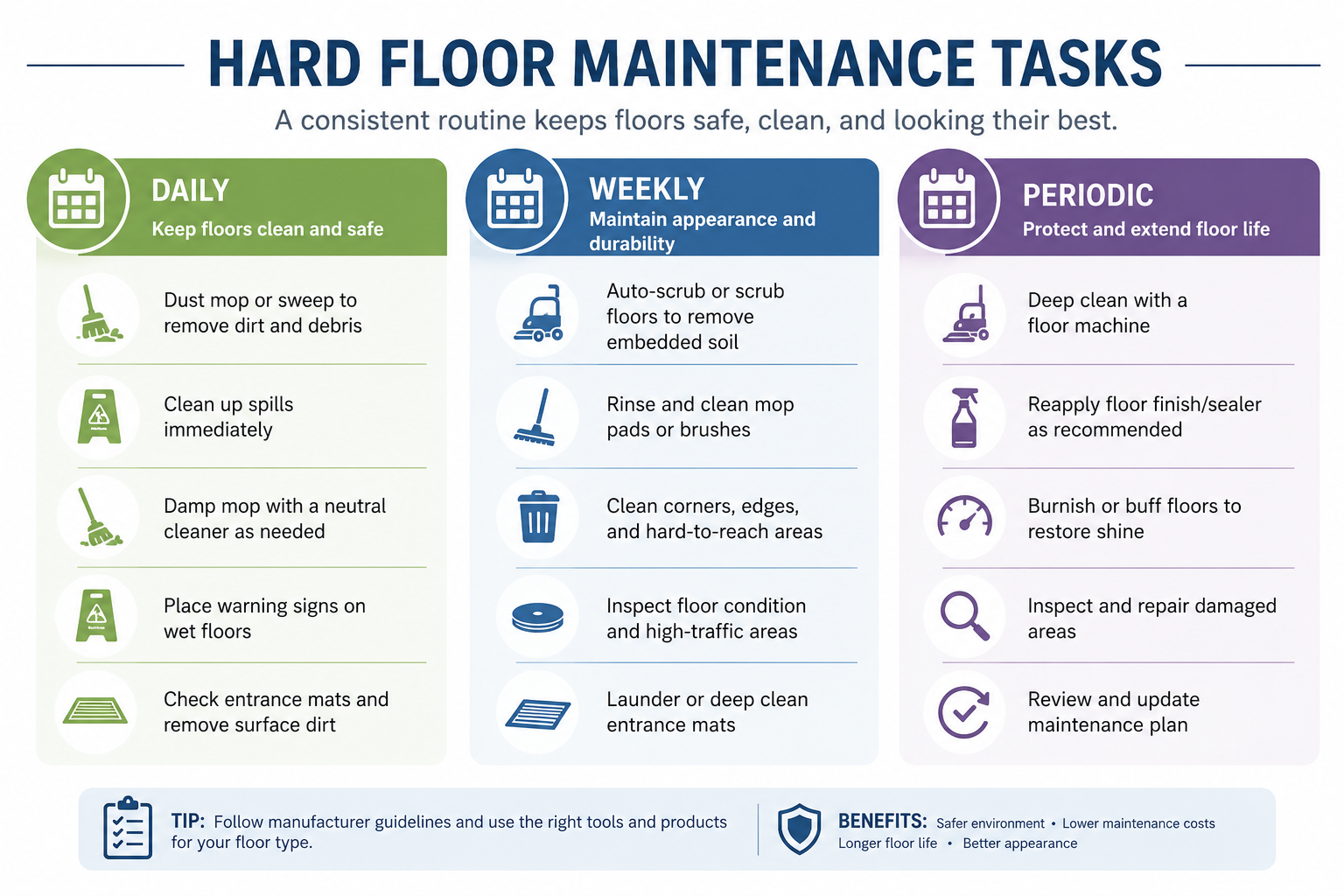
A simple schedule can include daily dust mopping, regular damp mopping, periodic machine scrubbing, and planned stripping waxing when needed.
Why Hard Floor Maintenance Matters in Milford, DE
Milford, DE buildings deal with a mix of foot traffic, changing weather, moisture, and daily use. From offices and public buildings to healthcare and educational facilities, clean hard floors help create a safer and more professional environment. Local facility managers need floor care routines that fit real building conditions, not one-size-fits-all cleaning.
Keep Your Floors Looking Their Best
ABS Facility Solutions LLC helps facility managers and building owners protect their floors with dependable hard surface floor maintenance, floor care, and stripping waxing support. To learn more about service options, call 856-302-1165.
Frequently Asked Questions
How often should hard floors be cleaned in a busy building?
Busy buildings usually need daily dust mopping and routine damp mopping. High-traffic areas such as entrances, hallways, restrooms, and lobbies may need extra attention throughout the day. The best schedule depends on foot traffic, floor type, and building use.
What is the difference between floor cleaning and stripping waxing?
Regular floor cleaning removes surface dirt, spills, and light buildup. Stripping waxing is a deeper process that removes old finish and applies new protective layers. It is used when floors look dull, worn, or difficult to clean.
How do I know when my hard floors need professional floor care?
Signs include dull finish, visible traffic lanes, scuff marks, sticky residue, or dark buildup near edges and corners. If regular cleaning no longer improves the appearance, professional floor care may be needed.
Can janitorial cleaning help floors last longer?
Yes. Consistent janitorial cleaning removes dirt and moisture before they damage the floor finish. It also helps maintain safer walking surfaces and reduces the need for frequent restoration.
Is stripping waxing needed for every hard floor?
No. Some hard floors require stripping waxing, while others need different maintenance methods. A trained cleaning provider can review the surface type and recommend the right floor care process.
Clean floors make a building feel better cared for from the first step inside. With the right maintenance schedule, facility managers in Milford, DE can protect their investment, reduce wear, and keep busy spaces looking professional. ABS Facility Solutions LLC is ready to help you learn more about practical floor care options for your building.