How Seasonal Changes Should Affect Janitorial Planning
A commercial cleaning program should not remain exactly the same throughout the year. Weather, building traffic, pollen, moisture, salt, and seasonal illnesses can all change what a facility needs from its janitorial team.
For property managers and facility leaders, adjusting the cleaning plan seasonally can help maintain appearance, reduce wear on surfaces, and keep high-use areas functioning more effectively. ABS Facility Solutions provides commercial janitorial, floor care, disinfection, restroom, day porter, and post-construction cleaning services tailored to the needs of individual facilities.
Spring Brings Pollen, Dust, and Moisture
Spring often increases the amount of debris entering a building.
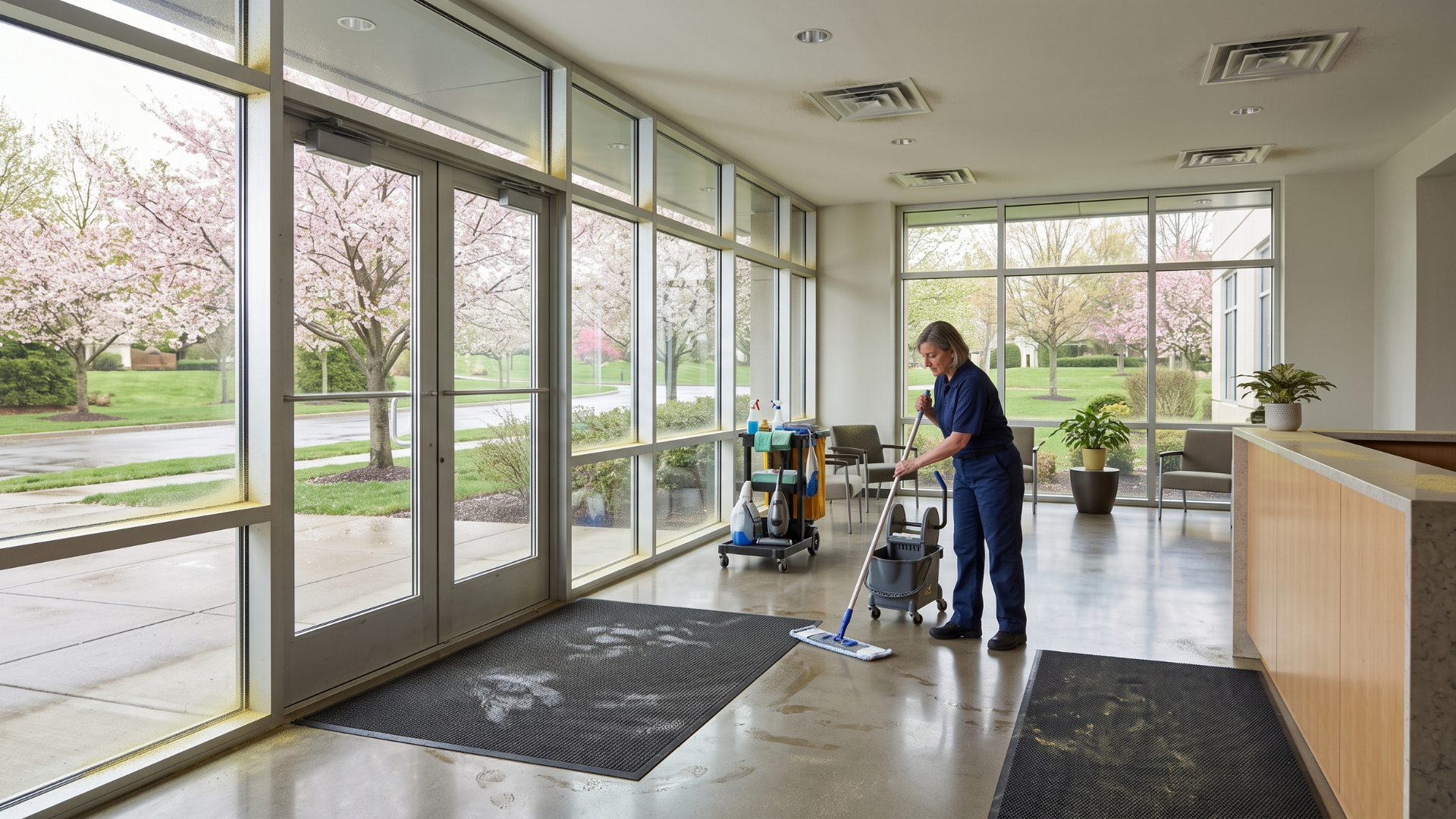
Pollen can collect on entry doors, windows, floors, and interior surfaces. Rain can also bring in mud and moisture, particularly around entrances and high-traffic walkways.
Janitorial planning during this season may need to place more emphasis on entrance mats, floor cleaning, glass, and dust removal.
HVAC use may also shift as temperatures change, allowing dust that accumulated during the winter to become more noticeable around vents and interior surfaces.
Summer Can Increase Traffic and Humidity
Summer cleaning needs depend heavily on the type of facility.
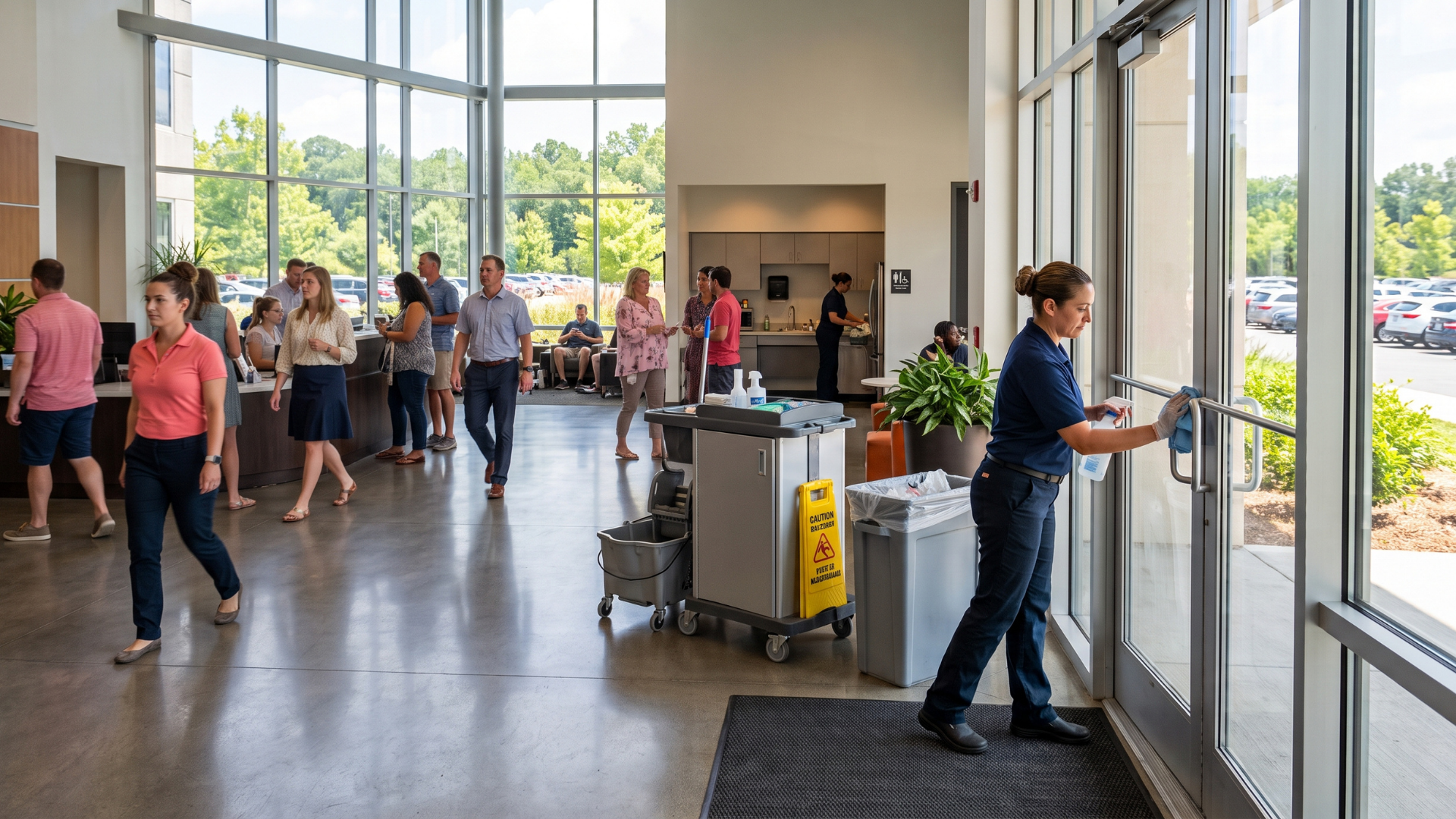
Commercial buildings with increased visitors, seasonal staff, or events may require more frequent restroom servicing, trash removal, and touchpoint cleaning. Warmer weather can also make odor control more important in restrooms, breakrooms, kitchens, and waste areas.
Humidity and moisture can create additional challenges in entryways and other areas where damp conditions persist.
A day porter can be particularly useful in busy facilities by responding to spills, restocking supplies, maintaining common areas, and handling visible cleaning needs throughout the workday.
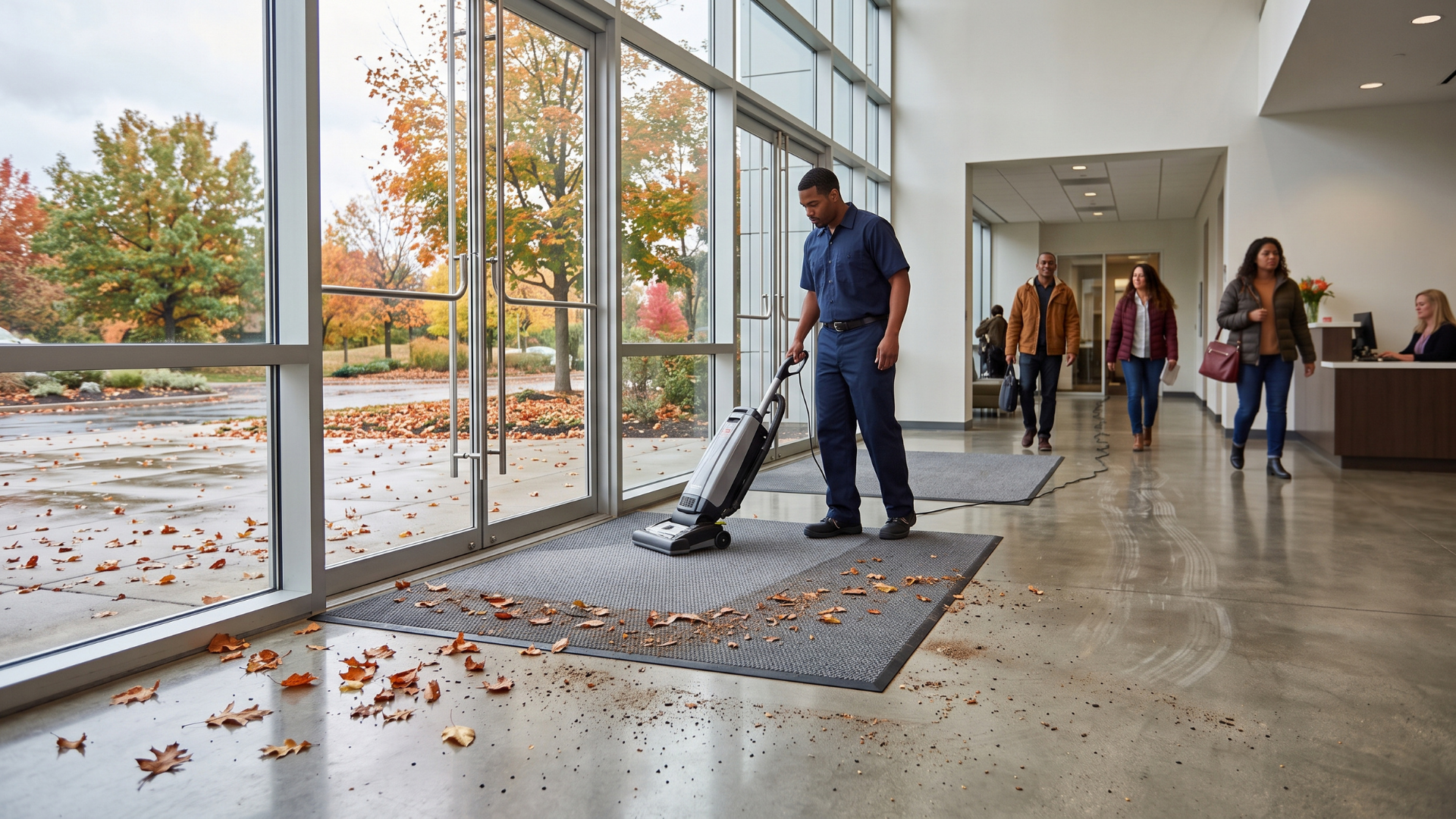
Fall Means More Debris at Entrances
Leaves, dirt, and changing weather can quickly affect commercial floors during autumn.
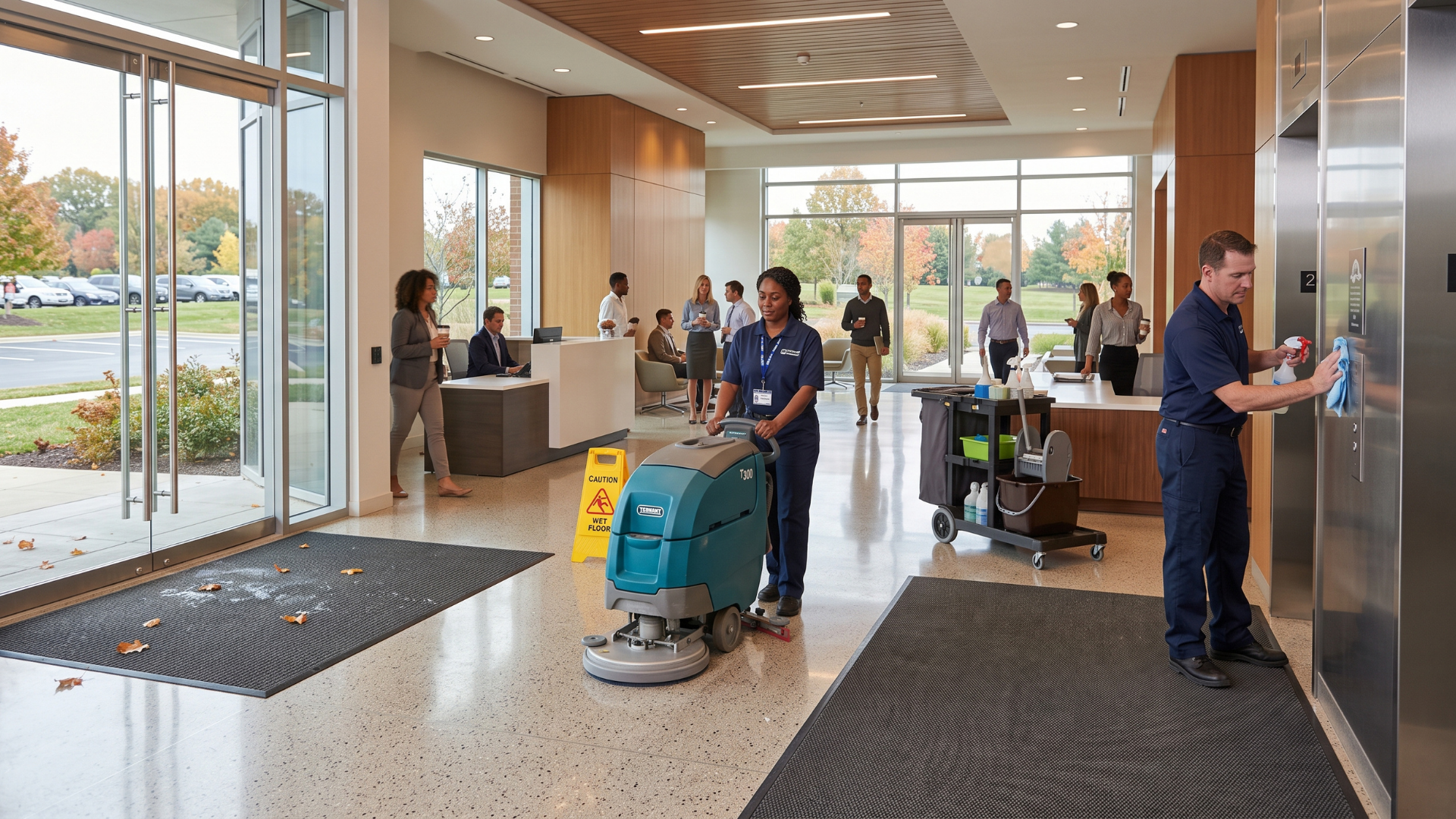
Entryways become especially important because debris carried indoors can spread throughout the facility. Fine grit can also act like an abrasive on certain floor finishes as people walk across it repeatedly.
Increasing mat maintenance, vacuuming, sweeping, and floor care around entrances can help contain that material before it reaches the rest of the building.
Fall is also a useful time to evaluate whether floors need deeper maintenance before winter conditions create additional stress.
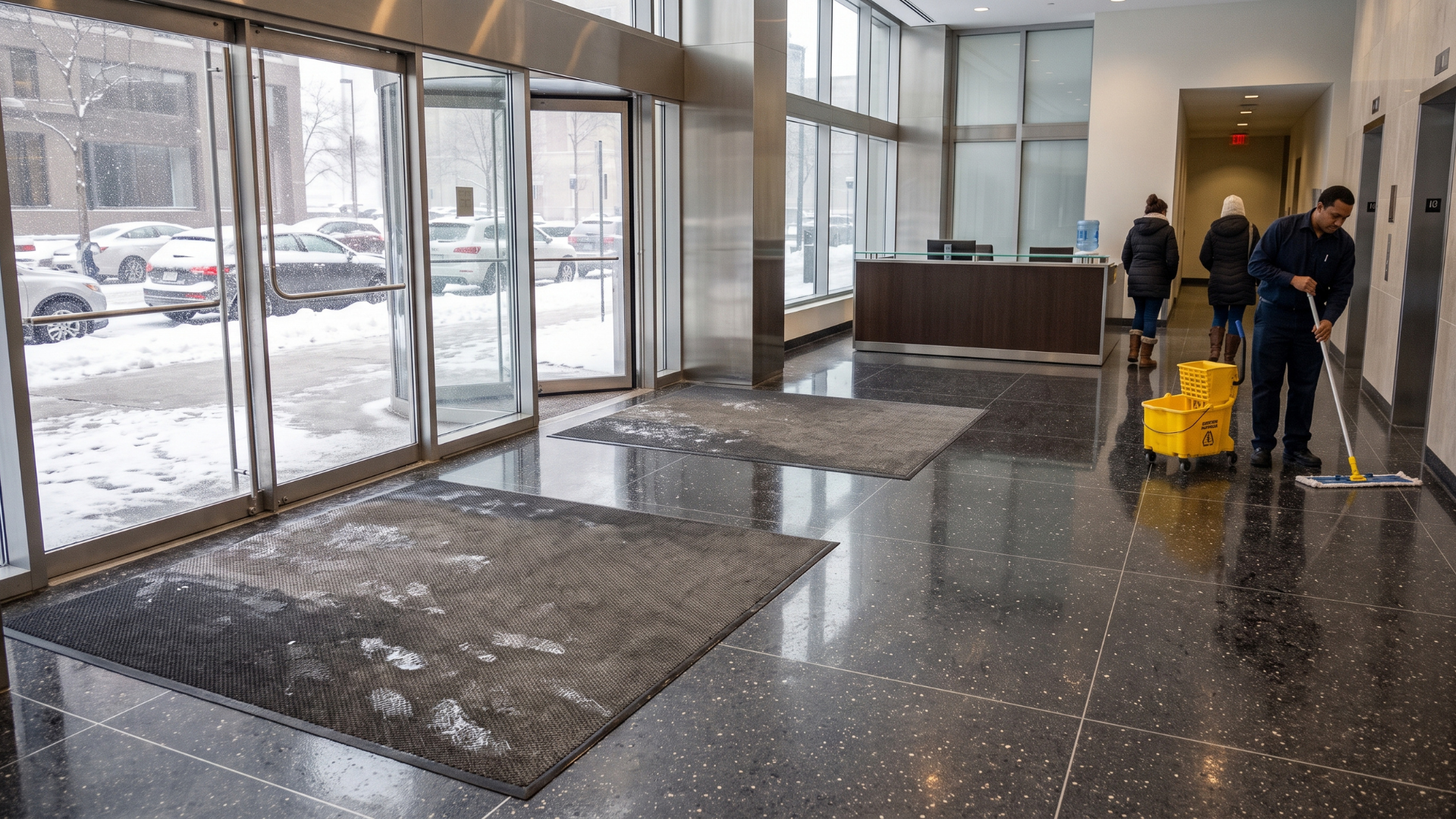
Winter Can Be Hard on Commercial Floors
Winter is often one of the most demanding seasons for floor care.
Rain, snow, slush, sand, and deicing materials can all be tracked indoors. Moisture can create slip concerns, while salt and other residues may leave visible white deposits or dull floor surfaces.
Facilities in colder climates may need more frequent attention to entrances, hallways, elevators, and other high-traffic areas.
Wet-floor response also becomes increasingly important. Mats should be monitored, spills and tracked-in moisture addressed promptly, and floors cleaned with methods appropriate for the surface.
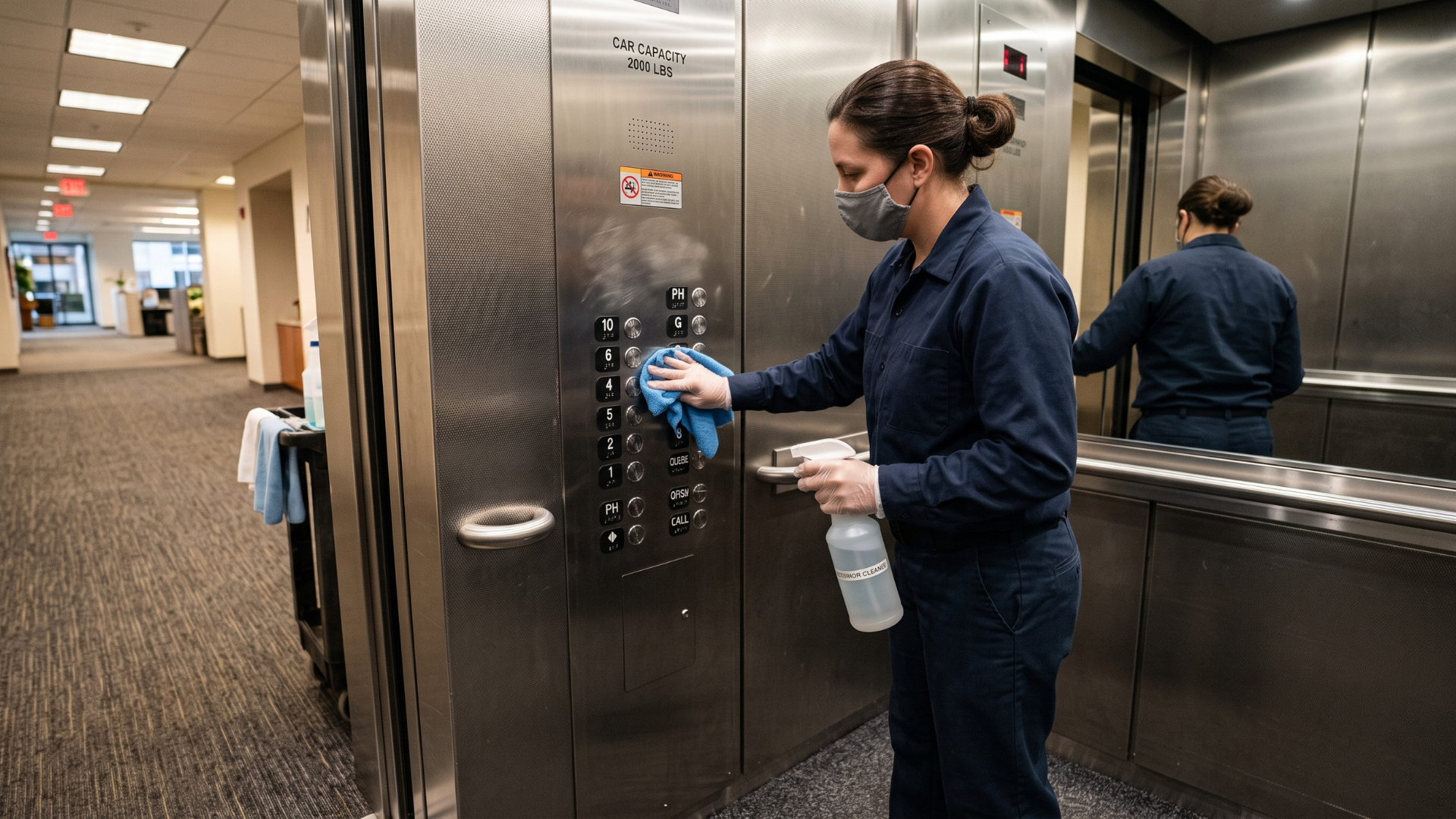
Seasonal Illness Can Change Cleaning Priorities
Cold and flu season often brings greater attention to shared surfaces.
Door handles, elevator buttons, restroom fixtures, breakroom surfaces, conference rooms, and other frequently touched areas may require more consistent cleaning and disinfection according to the facility’s needs.
Cleaning and disinfecting are not the same process. Soil and debris generally need to be removed before a disinfectant can perform as intended.
Product label directions, including required contact time and surface compatibility, should always be followed.
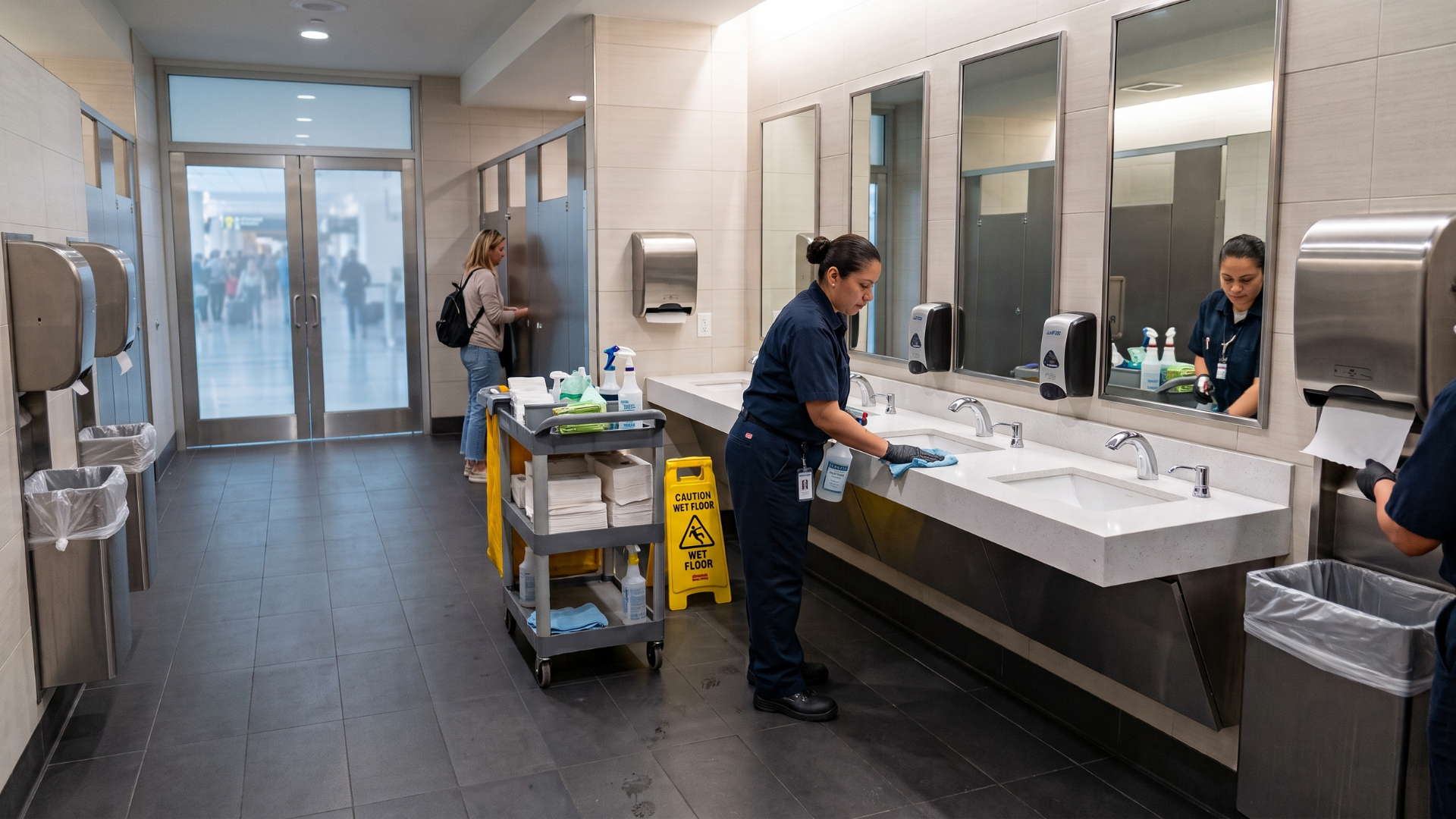
Restroom Needs Change With Building Use
Restroom cleaning frequency should reflect actual traffic rather than a fixed schedule that never changes.
Seasonal events, holiday periods, school schedules, staffing fluctuations, or changes in customer volume can all affect restroom usage.
A facility that is quiet during one season may become significantly busier during another.
Monitoring supply consumption, odor issues, floor conditions, and service frequency can help determine whether the existing schedule is still appropriate.

Review the Cleaning Plan Before Problems Appear
Seasonal janitorial planning works best when adjustments are made before conditions become difficult.
Facility managers can review traffic patterns, weather exposure, flooring materials, restroom usage, staffing, and previous seasonal problems to identify where additional service may be needed.
A cleaning program should be flexible enough to respond to these changes without waiting for appearance or maintenance issues to become obvious.
Keep the Facility Ready Year-Round
Spring pollen, summer traffic, fall debris, and winter moisture each create different challenges. The most effective janitorial programs recognize those changes and adjust cleaning frequencies, priorities, and services accordingly.
ABS Facility Solutions provides commercial janitorial service, floor care, restroom maintenance, disinfection, day porter service, and post-construction cleaning for a variety of commercial and professional environments. If your current cleaning schedule stays the same regardless of season, contact ABS Facility Solutions to develop a more responsive plan built around your facility’s actual conditions and changing needs.